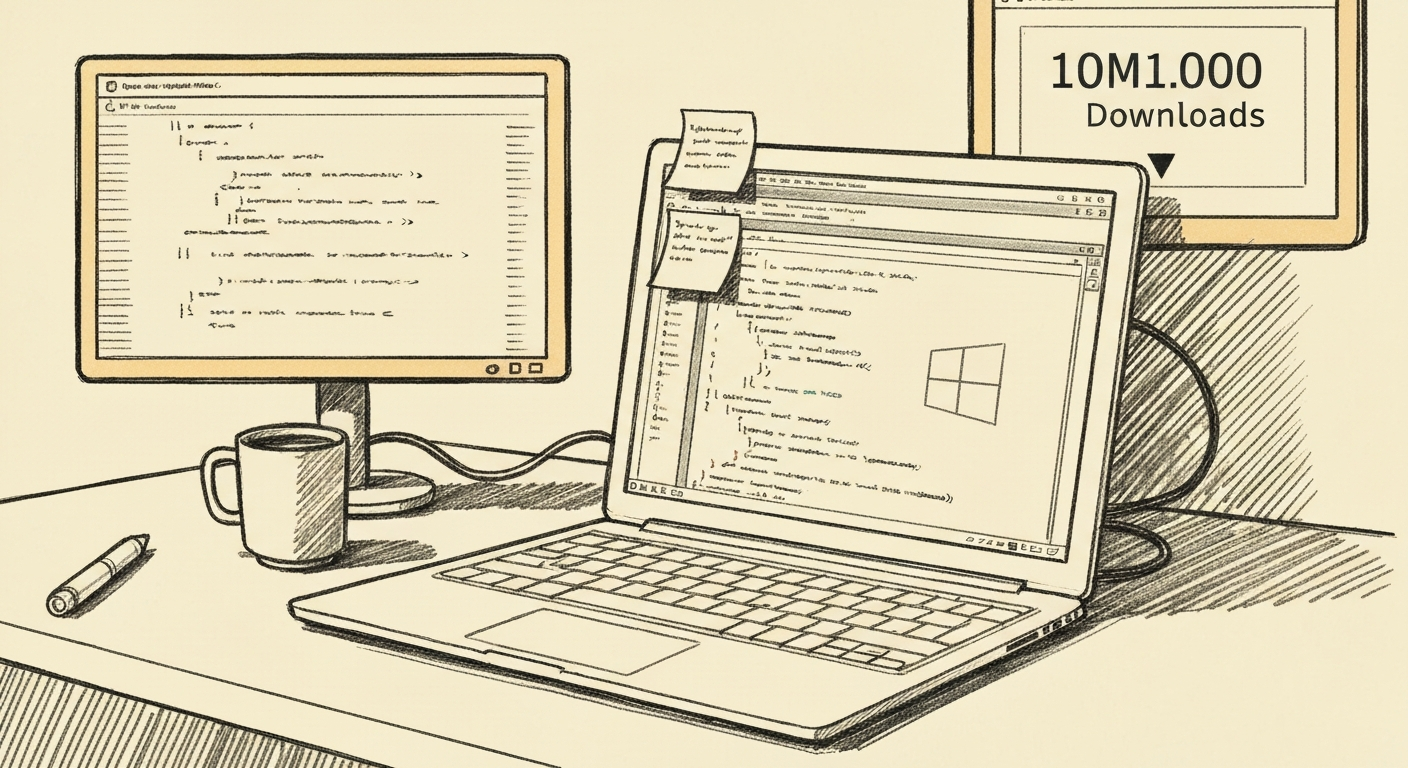
OpenAI Codex arrives on Windows after 1 million Mac downloads in week one
OpenAI's Codex desktop app landed on Windows via the Microsoft Store on March 4, 2026, roughly four weeks after a Mac launch that drew over 1 million downloads in its first seven days, according to the company. The Windows release addresses the largest share of developer workstations globally and clears a security engineering challenge that delayed the broader rollout. For developers already tracking the real costs of AI coding tools, this expansion adds a new data point to an already crowded field.
What Happened
OpenAI launched Codex for Windows on March 4, 2026, available through the Microsoft Store. The Mac version had launched February 2, 2026, and according to OpenAI surpassed 1 million downloads within its first week. As of the Windows launch date, OpenAI reports 1.6 million weekly active users across both platforms — a figure the company says represents more than a tripling of weekly users since the start of 2026.
The Windows delay was deliberate. OpenAI engineer Alexander Embiricos explained that Windows lacks the OS-level sandboxing primitives available on macOS, requiring custom engineering. The result is an open-source Windows sandbox using restricted tokens, filesystem access control lists (ACLs), and a dedicated sandbox user account. Two modes are available — standard and elevated — with elevated mode adding network access controls via Windows Firewall. PowerShell is supported natively; no WSL or virtual machine is required.
The app is available across all ChatGPT subscription tiers. Free and Go users receive temporary Codex access; Plus, Pro, Business, Enterprise, and Edu subscribers get double rate limits through April 2.
Why It Matters
The Windows launch matters for two reasons: reach and competitive signal.
On reach: Windows accounts for the majority of developer workstations globally. The Mac-only period created a structural gap in Codex's addressable market. That gap is now closed, and the 500,000-plus developers who had joined the Windows waitlist — according to OpenAI — indicate demand had been accumulating.
On competitive signal: Codex is entering an AI coding market that already has entrenched players. GitHub Copilot reported 20 million all-time users as of July 2025 with deep IDE integration across enterprise. Cursor crossed $2 billion in annualized revenue in February 2026 with over 1 million users and 360,000 paying customers. Against that backdrop, Codex's 1.6 million weekly active users — per OpenAI — puts it in the same user-count conversation as Cursor, though both sets of figures are self-reported and not independently audited.
One week of strong downloads is an early signal, not a verdict. As we examined in The Hidden Ledger: What AI Coding Actually Costs You (published February 28), download volume and sustained engagement are different measurements. The rate-limit language embedded in this launch — elevated caps only through April 2 — suggests the current free-tier window is promotional. If OpenAI tightens access after April 2, the retention picture will come into sharper focus. This is an early signal of traction; claims of market consolidation would require far longer a timeline to substantiate.
Stay informed. The best AI coverage, delivered weekly.